Search This Blog

Showing posts sorted by relevance for query sandgren. Sort by date Show all posts

Tuesday, March 26, 2013

Paid to lie, to you. (Updated 3-28-2013)

"Furthermore, in two separate complaints filed with the USDA, PETA accused UW-Madison of multiple violations of the Animal Welfare Act. When two comprehensive, multi-day investigations by USDA veterinarians failed to substantiate PETA's accusations, PETA changed its tune and now says they don't care that the study is being conducted responsibly, they still think it's wrong." -- Eric Sandgren. February 16, 2013. In "Eric Sandgren: Cat research, after all the drama." Wisconsin State Journal.
---
"Sandgren said an investigation will validate the department's handling of the research cat, calling PETA's complaint 'a stunt.'" September 12, 2012. "PETA complaint alleges mistreatment of cats in UW research." Wisconsin State Journal
---
Eric Sandgren | September 20, 2012 at 6:34 pm | Reply

At UW-Madison, we heard about the complaint, and received a copy from a reporter, at 10:00am on a Wednesday, By 1:00pm that afternoon we were able to state verbally to reporters and anyone else who asked that all of PeTA’s statements were unsupported (we could not respond to specific charges until we knew what they were going to be). That’s 3 hours! The detailed written point-by-point response went up on Monday the next week, after careful review by a lot of people, and we may consider posting something like that sooner should we find ourselves in a similar situation. This all worked because we have developed excellent cooperation among University Communications, our animal research program, and faculty and staff regarding animal activist attacks. We also have people willing to respond immediately. I too am amazed that PeTA keeps getting away with this stuff. How do we put them on the defensive? From the fringe group "Speaking of Research" website/blog
---
Federal inspectors have cleared UW-Madison on charges by the animal rights group PETA that university researchers violated multiple provisions of the federal Animal Welfare Act in their treatment of cats used in a 2008 eye movement study.

"I believed all along that we had remained in compliance," said Eric Sandgren, animal research oversight director at UW-Madison. "I'm comforted that the USDA agrees." " On Campus: UW-Madison cleared by feds in PETA cat research complaint." October 11, 2012. Wisconsin State Journal
---

Those damn lying animal rights activists; making up things about the University of Wisconsin. How dare they impugn the integrity of the vivisectors at UW-Madison!
The excerpt above is taken from the University of Wisconsin, Madison's appeal of the USDA citations that resulted from PETA's complaints regarding the care and use of the cats used in Tom Yin's highly invasive and cruel experiments on cats.

This is the opening of their appeal of the results of the USDA inspection report dated December 14, 2012.

Less obvious is that the citations they are appealing are the result of a four day investigation that resulted in the USDA documenting the chronic infections endured by the cats in the Yin lab.

So, all the while Eric Sandgren was telling anyone who would listen that PETA's assertions concerning the cats suffering in the Yin lab were false, he obviously knew otherwise -- because he is the university's head vivisector, the university's animal research public apologist, and he is the director of the university's Research Animal Resource Center. The cats in Tom Yin's labs were and are suffering from chronic infections so severe that some cats' eyes have had to be cut out of their heads.

From December 14, 2012, Sandgren knew that the USDA had indeed found problems that even they  thought deserved citations for violations of the minimal standards set by the Animal Welfare Act.

Come on, say it with me: Eric Sandgren is a paid liar.

Update: A few days after posting this demonstration of the most recent example (among many) of Eric Sandgren's and the university's matter-of-fact lying to the public, I was sent a reminder of Sandgren's appearance on the Jane Velez-Mitchell show with me on February 15, 2013.

The university issued a statement which starts out like this:
The information now being disseminated by People for the Ethical Treatmentof Animals (PETA) and advocates like James Cromwell about research at our university is unsubstantiated and flawed. We have conducted a detailed review of PETA's complaint and can find no evidence to support a single claim the organization makes. Moreover, a lab inspection was conducted by the U.S. Department of Agriculture in response to PETA's complaint and their review found no substance to any of PETA's allegations.

The pictures released by PETA show an animal undergoing surgery to receive cochlear implants. Just like in human surgeries, such procedures are performed under anesthesia and animals receive pain-relieving medication during and after a surgery. After surgery, the cats adapt readily to the implants, which do not cause discomfort or distress. They are healthy and behave normally.
This propaganda is chocked full of lies. In fact, the university was secretly appealing the USDA's citations at the same time they were saying that no violations had been found. There is little about what is being done to the cats in the Tom Yin lab that is "just like" therapeutic surgery on willing humans. In fact, the university knew full well that the cats were not readily adapting to the implants and that the  rate of very serious life-threatening infection from the surgeries was sky-high. Sandgren and the university knew all of this, but said the opposite on a nationally-broadcast television program.

Come on, say it with me again: Eric Sandgren is a paid liar.


Friday, January 1, 2010

UW-Madison Animal Research - More Problems Ahead

Here's the December 2009 USDA/APHIS Inspection Report that got the news media's attention this time around.

Feds Find Problems With UW-Madison's Animal Research
Program Gets More Than $200M In Federal Funding Each Year
Channel3000.com (WISC-TV)
December 31, 2009

Federal animal welfare inspectors find 20 violations at UW-Madison
By DEBORAH ZIFF
Wisconsin State Journal
December 31, 2009

USDA Found More Animal Research Violations At UW
Federal Agencies Conduct Joint Investigation Of UW Program
Channel3000.com (WISC-TV)
January 1, 2010

I couldn't help but notice the change in the statements being made UW-Madison head vivisector and spokesperson Eric Sandgren. He must have received an order from the public relations office.

Here's what he told WISC-TV reporter Linda Eggert on Wednesday after giving her a copy of the inspection report he had had in his possession for a few days:
"We passed the final exam, but we didn't get a hundred, and that's what we're working for," said Sandgren, who directs the group in charge of overseeing animal research.

Sandgren said the agencies simply felt it was time to do a comprehensive check and that OLAW needed to follow up on questions it had about UW-Madison's five-year renewal of its "public assurance" application for federal funding.

"Obviously, we took it very seriously. Their comments to us were that basically they thought we we're doing very well," Sandgren said.
Here he is being quoted two days later by Wisconsin State Journal reporter Deborah Ziff:
Sandgren said that when he got the 10-page report, "my stomach just went clunk."

"I'm not at all happy with the things listed there," he said. "That's just not acceptable."
Tomorrow, the university will have a different story; I imagine the PR office is working overtime.

All of this jive has to be placed in context. Sandgren and other vivisectors say routinely that the animals they use are respected and well cared for. They say routinely that strict regulations are in place that assure high quality care and careful monitoring of the animals.

The Animal Welfare Act, the main set of regulations routinely pointed to by the vivisectors as proof that the animals they experiment on are well cared for, has at its core, the idea that much effort must be made to insure that animals are used only when no alternative exists, that the least stressful and least painful methods are used, and that careful monitoring and safeguards are in place.

But the current inspection report makes it very clear that the Animal Welfare Act is routinely ignored by Sandgren and his fellow vivisectors at UW-Madison. They use the Act as a shield to deflect public criticism of their personal decision to spend their lives hurting animals. The simple fact that people who chose to spend their lives hurting animals will lie about it without qualm isn't a revelation. Liars thrive in society because we expect people to be generally truthful.

The University of Wisconsin-Madison vivisectors have more troubles ahead. The details of what led to this joint inspection visit haven't yet been exposed. No one has yet spoken about the revolt by the Vet school animal care staff, the details of the three suspended protocols, the details of the Michele Basso scandal; there is much dirt hiding under the UW's red rug that will come out in time and be blazened in more embarrassing headlines.

UW-Madison's animal research program is filled with rot and festering secrets. Stay tuned.

A funny postscript: The USDA Inspection Report linked to above is a copy provided to local media by Eric Sandgren. Notice the redactions. Sandgren et al argue that if animal rights activists (me, for instance) were to learn where animals were being kept on campus, that we would go berzerk, break in and destroy decades of "life-saving" research, undoubtely, just on the brink of a cure for some hideous disease of children. That's why the buildings and room numbers are blacked out. But why in the world would Sandgren et al hide USDA Veterinary Medical Officer Dawn Barksdale's name? Her name has been on these reports many times over the past few years. Here's the same much less redacted report posted on line by the USDA. BTW, the only research data destroyed at the university as a direct result of animal rights activism were the 628 videotapes of fifteen years of primate research destroyed by the university to keep them out of the public's hands after activists asked for a copy of a single one. Go figure.

Friday, March 1, 2013

UW-Madison, Feeling the Heat

I've been a reasonably close observer of the University of Wisconsin, Madison's use of animals and the things they say about it for quite a while. Over the years, I've watched them lie, pay-off critics, cover-up scandals, strike back at whistle-blowers, censor the information that the law forces them to provide to the public, spend large sums to keep themselves out of a critical spotlight, and just generally cringe whenever the light of day exposes a few tiny details of their very dark world.

One metric of the effect of public criticism on the university is its response to those criticisms. The more they try to defend themselves, the more likely it is that public comment from critics is making them uncomfortable. In my experience, they have never chosen to say too much in public, and rarer still, in the local papers, about what they are doing to animals unless pressed by a news reporter who they believe is going to write something that they fear could be embarrassing to them. This makes Research Animal Resource Center Director Eric Sandgren's two online essays about the university's decision to resurrect its use of maternal deprivation all the more noteworthy. They must be feeling some concern over the growing number of critical voices.

I appreciate Sandgren and his writing team taking the time to defend the university, the people who approved the study, and Ned Kalin. Their assertions provide an opportunity to look at their claims and omissions with some specificity.

Sandgren's two essays can be read here: "Mundane but important facts about the peer-rearing animal protocol review," and here: "The rest of the story."

Sandgren's apology begins with a well-worn bit of misdirection. He says, "Regardless of whether one supports or opposes the research, we can agree that it raises important ethical issues that deserve an open and informed discussion."

That sounds so very reasonable, except that in a case like this, open and informed discussion is meaningful only when it occurs prior to a decision, and particularly so when it's very obvious that the decision will be controversial. After the fact, giving lip service to the notion of open and informed discussion is just plain old spin.

A recurring theme in their post-hoc defense of their decision to approve Kalin's use of maternal deprivation is the claim that taking baby monkeys away from their mothers, keeping them alone, and then pairing them with other babies who were taken away from their mothers just isn't such a big deal:

Sandgren, in "Mundane": "the proposed studies produce at most a moderate early life stress... peer-rearing actually is used to save a monkey’s life when a mother rhesus rejects its infant and a foster mother cannot be found." (A mother monkey isn't an it.)

And then again in "The rest": "this same approach is taken to rearing baby rhesus monkeys whose mothers reject them at birth and who are not adopted by a foster mother. In other words, sometimes peer-rearing is used to save a baby monkey’s life."

This claim is both wrong and very odd; Sandgren seems to be saying that loneliness itself is life threatening, but decades of horribly cruel social deprivation experiments at UW-Madison proved repeatedly and redundantly that it isn't. A baby monkey taken from his or her mother could starve to death, of course, but putting him or her with another orphaned baby doesn't alleviate that risk and placing him or her with another orphan wouldn't save the baby's life.

Moreover and very distasteful, is the implicit claim that there is a concern for an orphaned baby monkey's life. This is one of those cases when someone uses words to mislead, or else is completely unaware that they are using words that has one commonly understood meaning and a much different one elsewhere.

The only reason they take steps to save a baby monkey's life is so that they can decide for themselves later on how to kill him after using him in some income-generating experiment.

Another recurring claim in their public statements is the assertion that the babies aren't really being socially deprived.

Sandgren: "The monkeys are not kept in total isolation. They are reared in a human-style baby incubator by people who feed and otherwise care for these infants...".

This is a very fine point. It is a reference to previous decades of egregious cruelty at the university that most readers will miss. In many past experiments, babies were taken from their mothers and kept in complete isolation for extended periods of time, being unable even to see the person who replenished their food and water. But the claim that the current methods aren't actually cruel because even more horrible things were done to monkeys in the past is a fallacy; it is probably being repeated so often because university spin-Meisters believe it will mollify critics or at least mislead the average reader or listener.

They should have done their homework. The effects of maternal deprivation are well-known; a few brief daily visits from a technician aren't sufficient to rectify them. The human-based evidence of this fact is extensive and has been well known since at least the early 1950s. Even today, studies continue to document the long-term consequences to humans when they are reared in far less-deprived circumstances and to determine the most effective routes to improved emotional well being:
The individuals’ development is continuous, genetically determined and environmentally structured and responsive. Institutionalization of infants and young children in ‘adverse conditions’ provides an environment with low emotional tones and poor stimulation with lack of sufficient responsive caretaking. John Bowlby’s seminal work “Child Care and Growth of Love” written in 1951 and later updated in 1965 with two additional chapters by Mary Ainsworth states deprivation results from lack of substitute mother, inadequate, inconsistent care and lack of sensitive nurturing. In early institutionalization, we can speak about “parental deprivation” instead of “maternal deprivation” as the paternal figure can successfully substitute that of the mother. Studies on the effects of maternal deprivation in the first year of life demonstrate that children show delayed psychomotor and speech development, lack of novelty seeking, poor emotional expression, lack basic trust and they do not seek adults when in distress. These effects are also evident in observations of children institutionalized between 1 and 4 years of age who show the three phases of Protests, Despair and Detachment. Romanian adolescents: literature review and psychiatric presentation of Romanian adolescents adopted in Romania and in Canada. Iftene F, Roberts N. Can Child Adolesc Psychiatr Rev.
In the case of rhesus monkeys, the research is also clear:
Different species of nonhuman primates vary in their response to different nursery rearing conditions. However, studies conducted for over 30 y have shown that in general, raising infants in pairs continuously with the same partner causes behavioral deficiencies. Compared with those raised by using other rearing methods, these infants showed more fear, social withdrawal, aggression, and less nonsocial exploration in this and other studies examining this rearing condition. These differences were thought to be due to the infants' excessive and persistent partner clinging, which precluded independent exploration. Although clinging was initiated by both partners equally often, infants were physically unable to break the clasp of their partners. In addition, infants who received partner clinging often responded to their partner's behavior with aggression.... The effects of four nursery rearing strategies on infant behavioral development in rhesus macaques (Macaca mulatta). Rommeck I, Gottlieb DH, Strand SC, McCowan B.J Am Assoc Lab Anim Sci. 2009.
Sandgren's use of the term "a human-style baby incubator" is also misleading. Human babies in incubators are cared for much differently than the monkeys isolated in the so-called human-style incubators at the university monkey labs. There is a growing trend to provide human infants confined to an incubator with frequent massage and physical stimulation.

Additionally, rhesus monkeys mature more rapidly than humans. This could mean that the subjective experience of being kept alone for the first six weeks of life is much more stressful for a rhesus monkey than it would be for a human.

Sandgren goes on to claim that "clinical records show that, in the UW-Madison colony, peer-rearing typically only is associated with thumb sucking behavior (just one young monkey in 10 years injured herself, and she recovered). Peer-rearing will measurably increase anxiety, as required by the experimental design ...".

As I have pointed out many times, the university and its spokespersons, including Sandgren, have a history of telling lies when the lies serve the interests of the university. There is no reason to believe his anecdotal claim about what the clinical records show. If the records substantiate his claim, the university should make them public; to know whether they genuinely demonstrate what he claims, Sandgren would have to make the daily care records, animal care staff comments, and the veterinary records available for public inspection and consideration. Short of such a full disclosure, their history of lying to the public suggests quite strongly that this claim is just more of the same.

In "The rest," Sandgren takes the writer of an Animal Legal Defense Fund blog to task for using the word "relentless." He writes:
The monkeys are not subjected to 'relentless fear'. Instead, approximately once a month for up to 18 months their reaction to a novel situation is observed. What are these novel situations? An unfamiliar human stands in front of their cage. An unfamiliar monkey is housed in an adjoining cage, or the two are housed together in a play cage. And one time, the monkey can see a snake, closed within a solid glass aquarium that sits outside the monkey’s cage. That does not constitute relentless fear.
Once again, Sandgren spins what he knows, or ought to know, to be otherwise. These so-called novel situations were not chosen because of their novelty.

Kalin has been using these "novel" methods for decades. Here's how he explains why he uses an "unfamiliar human":
When threatened, primates commonly engage in behavioral inhibition or freezing behavior. Freezing is an automatic response characterized by the cessation of motor and vocal activity. In monkeys, individual differences in freezing duration are stable over time and reflect individual levels of anxiety. Adaptive freezing helps an individual remain inconspicuous and decreases the likelihood of predatorial attack; however, excessive freezing, or behavioral inhibition, is a risk factor for the development of anxiety disorders. The human intruder paradigm was developed to study primates’ defensive behaviors, such as freezing, and their regulation in response to changing environmental demands... Brain regions associated with the expression and contextual regulation of anxiety in primates. Kalin NH, Shelton SE, Fox AS, Oakes TR, Davidson RJ. Biol Psychiatry. 2005
And compare Sandgren's description of how and why the snake will be used with Kalin's:
During the snake exposure test, animals will be placed in the small primate cage. The testing apparatus will be placed in front of the cage and the animals will be presented with their most preferred food items placed on top of a clear plastic box at contains a stimulus such as a live snake, rubber snake, roll of tape or nothing. Our previous work has shown that each of these items elicits a response in primates, with the live snake eliciting the most reliable and robust fear response. [Kalin cites published scientific papers at this point in his description, but the citations have been censored by the university.] The items that are not fearful or those that elicit lesser responses are included as comparison and control measures to quantitate the magnitude of the animals' response to the live snake. From Kalin's approved protocol, "Effects of early experience on the development of anxiety and its neural substrates." Pg 18.
Everything Kalin is doing to the babies is intended to cause them anxiety and fear. He expects this ordeal to cause their brains to develop differently than the brains of monkeys not similarly deprived and frightened. Are the fearful experiences relentless? Not in the sense that they continue around-the-clock, but certainly so in the sense that they are frequent and recurring events in these young victims' short and intentionally difficult lives.

After trying to mislead people about the nature of the deprived conditions and stress-filled experiences of the babies, Sandgren then launches into an attempt to justify the cruelty. And again, he either misunderstands what Kalin is claiming or else is just again being a propagandist for his employer and industry.

He begins in "The rest" with an appeal to Kalin et al's past work. he says, "In previous studies, these UW-Madison researchers mapped out pathways in the brain that are overactive in anxious monkeys (it turns out the same pathways are overactive in anxious humans too)." But again, he misleads.

Kalin's experiments on monkeys did not inform scientists about humans' brains; the exact opposite is true. Here's Kalin's quote from "The Neurobiology of Fear," a 2002 Scientific American article that was update from a 1993 article:
To follow up on the finding that humans with a preponderance of right frontal brain electrical activity are more likely to be anxious, we, along with [Richard] Davidson, examined the individual differences in this measure of brain activity in young monkeys. Similar to the observations in humans, we found that each animal's pattern of frontal brain activity was stable over time, such that animals with extreme asymmetric right frontal activity remained that way as they matured.
Continuing his defense of Kalin's project in "Mundane," Sandgren claims that the project has a clear scientific rationale. But he is not unfamiliar with the rationale Kalin used in his letter to a reporter with The Capital Times newspaper:
It is now widely accepted that early stressful environments that include parental stress, physical, sexual and emotional abuse, neglect and inadequate parenting are the most relevant risk factors for the later development of psychiatric illness. Unfortunately, this type of adversity during childhood is endemic in our society. These early adverse circumstances can change the trajectory of a developing brain such that it becomes wired in a way that leads less fortunate individuals down a path of anxiety, depression and other forms of psychopathology. Discovering new interventions aimed at preventing the long term consequences of early adversity in children is critical and requires a basic understanding of the influences of suboptimal rearing on the primate brain. Recent advances in neuroscience and molecular neurobiology allow us, for the first time, to identify promising new molecular pathways that have the potential to counter the effects of early adversity on childhood development.
Kalin rationalizes his cruelty with the wild claim that the identification of irregularities in the brains of orphaned male rhesus monkeys isolated during the first weeks of their lives, and then repeatedly frightened, will lead to a drug (that's what is implied by his "new molecular pathways") that will cure or prevent the highly variable results that stem from the even more variable circumstances surrounding "early stressful environments that include parental stress, physical, sexual and emotional abuse, neglect and inadequate parenting." That sounds more like pie-in-the-sky than a clear scientific rationale.

Even sillier is Sandgren's faith-based assertion: "this study also will be highly relevant to the causes of anxiety in humans." But he doesn't know this. His assertion is anything but scientific or rational. He plays the role of the soothsayer. The majority of the results from attempts to measure the efficacy of animal models of human biology point strongly to the opposite likelihood.

Moreover, the apparent absence of clear beneficial results for human sufferers of emotional distress that stem from Kalin's decades of previous work using monkeys as models of anxiety and fear in humans stands in stark contrast to both his and Sandgren's assertions that anything of benefit to human patients will result. If there were much to ballyhoo from his previous projects with monkeys, I suspect it would have been mentioned by now, by someone, in neon lights.

Sandgren argues at some length in "Mundane" that oversight of research using animals by the university's Institutional Animal Care and Use Committees (IACUCs) is not just a rubber stamp. He both admits and denies that essentially all proposed experiments are approved.

First he quotes Wesleyan University Professor of Philosophy Lori Gruen: “the oversight committee chairs [at UW-Madison] told me they have never rejected a proposal. Not one.”

Then he says: "When our IACUC chairs say “failure to reject”, they mean that almost all protocols eventually reach a state that the IACUC can accept.

Then he says: "Perhaps a more accurate statement would be that our IACUCs reject 92 percent of the proposals they receive."

But his argument that the oversight system is working boils down to this: The committees eventually approve essentially every experiment that comes before them, even one that is as controversial as Kalin's. A duck, he seems to be saying, is not a duck.

Vivisectors have a very unscientific habit of ignoring evidence that does not support their self-image. Research shows that the use of animals isn't a very productive methodology. Research shows that IACUC committees do seem to act as rubber stamps. Research shows that the workers within the system are uncomfortable with and often embarrassed by what they are forced to do. Research shows that a system like the one surrounding the use of animals at a university will breed secrecy, cruelty, and public denial.

The university must be feeling the heat. As a result, Sandgren has tried to spin the plain facts and has presented false and misleading claims without presenting anything other than anecdotal claims and expressions of his faith and obedience in support. It is worth noticing that he did not point readers to Kalin's approved protocol; that information was made public by the Alliance for Animals.

The University of Wisconsin, Madison has a long, well-documented, and entirely despicable history when it comes to honesty and openness about its use of animals. Sandgren's two essays are simply the newest chapter in this (so far) never ending story of their cruelty.

Sunday, June 13, 2010

Not So Deep Thinking

The passage below comes from “Local animal rights activists are making strides with new tactics,” an article by reporter Deborah Ziff posted on the Wisconsin State Journal’s website on June 12, 2010.
Eric Sandgren, director of UW-Madison's animal care and use programs, said the university has been "tremendously influenced" by animal rights groups. The pressure has prompted the university to be more open with meetings and records, Sandgren said.

"They keep putting it in front of my face that I'm responsible for these animals," he said. "Yes, it does make me take it more seriously."

However, research opponents say they are still far from their ultimate goal: the elimination or significant reduction of animals used for research. Many scientists believe animal research is well-regulated and greatly benefits science and medicine.

"I have thought very hard about this," Sandgren said. "I have considered the ethics. The animal activists have thought very hard about this and considered the ethics. We reach very different conclusions, using the same ethical tools. That does not mean either of us has done anything wrong."


Eric Sandgren claims that pressure from animal rights groups has prompted the university to be more open with meetings and records. This isn’t accurate.

About six years ago, the university tried to bar public attendance at and any recording of meetings of the six animal care and use committees. University legal counsel told them that they could bar public attendance at only the closed sessions, which they continue to do even when they have few if any items on the agenda that would legally justify a closed meeting.

During this same period, the university has become much less open regarding public records. A lawsuit was recently filed against them over this exact problem. They are increasingly using high fees, and even open-ended cost "estimates" as barriers to public access to public records. And the redactions – the parts censored from public view – are often significant.

Reporter Ziff writes: “However, research opponents say they are still far from their ultimate goal ... Many scientists believe animal research is well-regulated and greatly benefits science and medicine.”

Ziff misleadingly and conveniently mislabels people who are opposed to cruelty as being opposed to research. [But see the comment.]

And she is errors again when she claims that: "Many scientists believe animal research is well-regulated." In fact, even the USDA’s Office of Inspector General has found that USDA oversight of animal research is lax and largely ineffective. It is unlikely that Ziff interviewed scientists who were not financially vested in the system or who do not have a personal or professional interest in controlling public perception.

Eric Sandgren says that he has thought very hard about the use of animal and has considered the ethics. Eric Sandgren may believe this, but an independent observer would probably say that his thinking wasn’t very deep or productive.

Eric Sandgren has explained clearly on a number of occasions why he believes animal research is ethical: it is legal.

This is the part and the parcel that has resulted from Eric Sandgren’s “very hard thought” about human society’s instrumental use of animals. But even his claim that he finds if acceptable due to its current legality must be taken with a grain of salt.

In an article co-written by reporter Ziff and placed on line June 4, barely a week before the article discussed here, Eric Sandgren commented on the university’s illegal decompression experiments on sheep, said: “Any kind of an approach that puts scientists or anyone else at risk for legal action obviously is going to have a kind of dampening effect.”

Monday, January 18, 2010

Eric Sandgren: “We do not make excuses.”

I had to laugh for a moment at Eric Sandgren’s guest column in the Saturday Wisconsin State Journal, “Eric Sandgren: Inspection of animal labs will make us better.” (January 16, 2010.)

Two statements were particularly comical: “We do not make excuses …,” and “we take responsibility…”.

His column seemed to have two goals: 1. Give an excuse for a few of the many problems noted by the USDA and OLAW, and 2. Scold local media for quoting the inspection reports.

He claimed that “early news coverage misrepresented” the problems, apparently trying to make readers believe that the federal inspectors’ written reports did so as well since the language from the reports was a key element in local media coverage.

Let’s look at his excuses for the violations and compare them with the USDA report and the regulations the inspectors cited them for violating. You can read the USDA report here.

1. His excuse for the inspections:
In December, the U.S. Department of Agriculture and the National Institutes of Health Office of Laboratory Animal Welfare (OLAW) performed a routine inspection of the UW-Madison animal program. USDA is required by law to inspect all research institutions at least once per year. OLAW visits several institutions each year.
The USDA inspection was officially a “Routine Inspection.” This is noted on the inspection report itself. But the inspection was far from routine. Typical “Routine Inspections” routinely find few violations. The reasons for finding few violations are many, but a large one is that inspectors commonly arrive alone and stay for a few hours or a few days at most. In this case, a team of inspectors was at the university for two weeks.

“Routine Inspection” reports routinely amount to a page or two in length. A September 2009 UW-Madison “Routine Inspection” of “All Campus Sites” is just over a page in length, and an April 2009 “Routine Inspection” of “All Campus Sites” is a single page. The December 9, 2009 inspection that Sandgren says was a “routine inspection” is ten pages long. That’s not routine.

Sandgren says that OLAW visits “several institutions each year.” But he should have said, OLAW visits only a few institutions each year, and usually, only if they suspect serious problems. USDA and OLAW showed up at the same time. That’s not routine.

2. His excuse for the reasons for the inspections:
That is the point of inspections: to provide us with an independent evaluation of our program. The findings prove extremely helpful in our own efforts to continually improve.
Actually, the point of the inspections is to monitor compliance with federal regulations and to cite violations. Independent evaluations are provided by the American Association for Accreditation of Laboratory Animal Care International (AAALAC), a private, nonprofit organization that accredited organizations, like most of the animal-using colleges at the university, claim is the “Gold Standard for animal care and use in science.”

The fact that the inspectors found so much wrong that this accredited institution itself could not see doesn’t say much for the institution’s effort to improve.

Insiders allege that the joint inspection was stimulated by multiple complaints to OLAW and USDA from animal care staff. There is no way to confirm this, but if it’s true, that’s not routine either.

3. His excuse for the dirty surgical suite:
USDA found inadequately cleaned areas in one of 10 surgical areas examined. The rest looked great. The outlier is now clean, and everyone using it knows they better keep it that way.
Nowhere in the report does it say that other surgical suites “looked great.”

What is implied when he says: “The outlier is now clean, and everyone using it knows they better keep it that way”? Do researchers at the university have to be ordered to maintain a sterile surgical environment? What does it imply about their concern for the animals they are operating on or even their basic understanding of germ theory? What does it say about the competence of RARC and the animal care and use committee whose job it was to insure compliance with the federal regulations who allowed the surgical suite to become and remain dirty?

The inspectors reported that they inspected the surgical suite after it had been cleaned and found rusty equipment (which makes it very difficult if not impossible to adequately clean), hair clippings on a table, drips/splatter residue on a wall, an excessive accumulation of dirt on the air vents, and dark colored material on the front drawers of an anesthesia machine. And yet, the university claims that its research and science and animal care is cutting-edge. Blather.

4. His excuse for not requiring researchers to explain how they ascertained that there are no less- or non-painful alternatives:
Our current animal use application reminds applicants to “make sure the proposed procedures cause the least possible stress to animals,” and requires them to confirm that they have done so. We will now also require a narrative description in the application of how this requirement was met.
The inspectors wrote: “There is nothing to indicate that the principal investigators had considered alternatives to potentially painful procedures that may cause more than momentary or slight pain and/or distress to the animals in the written narrative.”

Sandgren says, “We will now also require a narrative description in the application of how this requirement was met.”

But USDA Policy# 12 requires:
a written narrative description of the methods and sources used to consider alternatives to procedures that may cause more than momentary or slight pain or distress to the animals;
The university stopped referring researchers to this policy sometime after 2008. He should have said they the university will go back to requiring a narrative.

His excuse for the dogs not receiving veterinary care:
The animals in this study were being monitored by veterinarians, who were treating their patients as they recovered from surgery. The error was in failing to inform our laboratory animal veterinarians about the animals’ condition so that they too could participate in patient management. That communication problem is now fixed.
Because this study (#V01296) was taking place at the vet school (that’s what the V stands for), it was veterinarians who were directly responsible for causing the dogs’ health problems in the first place. In all likelihood, the dogs were being experimented on by Milan Milovancev, DVM, and/or Jonathan McAnulty DVM, and/or Ellison Bentley, DVM, and/or Richard Dubielzig, DVM, and or Annette Gendron-Fitzpatrick, DVM. Saying that the dogs were being monitored by veterinarians is like saying that the humans experimented on by the Nazis were being monitored by doctors. In neither case would it be anything but odious to call the victims “patients.”

There was a communication problem. The inspectors noted that three dogs and other animals had severe health problems and that there was no record that the attending veterinarian had been notified. They went on to say that:
It is the responsibility of the research facility and research staff to have a mechanism of direct and frequent communication to ensure that problems of animal health and/or behavior are conveyed in a timely manner to the attending veterinarian for evaluation and assessment to ensure the health and well-being of the animals.
Sandgren says: “We do not make excuses for any of the problems. We take responsibility for them all.”

Sandgren’s column is a short laundry list of excuses for many problems. He says they are sorry and will try to do better. He also says they take responsibility for the problems. Exactly how do they do that? Will people lose their jobs? Will salaries be cut? What does “take responsibility” mean?

Apparently nothing.


A postscript: Sandgren tries to take media to task for misrepresentative reporting, but most of the reports said that USDA had twenty violations. This was subsequently mentioned by university animal research defenders as "only twenty" violations. Sandgren didn't correct that error in his column. Look at the report. There were twenty different kinds of violations.

In fact, conservatively, there are close to a hundred individual violations; count them up yourself. Looked at this way, media reporting did Sandgren and his crew a favor.

Saturday, June 11, 2011

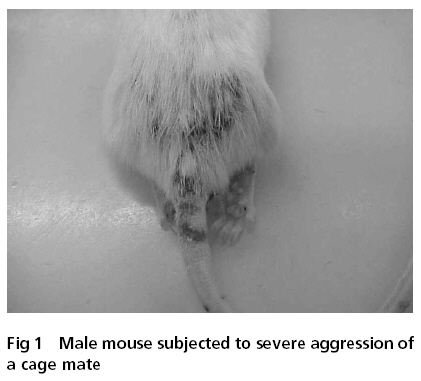
Eric Sandgren: "The mice don't harm each other."

In the typically formulaic response to unwanted attention being drawn to likely problems with animal care at the University of Wisconsin, Madison, go-to propagandist Eric Sandgren dismissed concerns over the fights forced upon mice in more than a decade-long series of staged fights between male mice. He was apparently interviewed by a couple of reporters:
"Aggression research like this isn't really the point of the law," he said. The mice don't harm each other, but display aggressive behavior and back away, Sandgren added. "They (researchers) don't see animals that are limping." (WISN.com)

---

[Eric Sandgren] says the "fights" generally consist of one mouse charging at another, who retreats, and that no encounters led to serious injuries. "It's a behavioral fight." (Isthmus)

---

[Eric Sandgren] said fights generally involve mice displaying aggressive behavior but then backing away.

"(The researchers) don't see animals that have wounds," he said. "They don't see animals that are limping."(Wisconsin State Journal)
This calculated spin contradicts reports from university insiders familiar with the care of mice and research on aggression in captive mice.

Because so very many mice are used in research, caring for them (prior to experimenting on them) has been the subject of some research. Aggression in male mice is apparently a well-recognized problem in the industry. If, as Sandgren claims, fights don't lead to wounding, then, in fact, there would be no need to study the problem. But, bite wounds can be serious and can lead to death. The additional stress of being unable to escape from an aggressor has raised questions about the reliability of data generated from experiments using them.
In a laboratory environment, aggressive interactions between male mice may exceed normal levels leading to negative effects both on the well-being of the animals and on the validity of experimental results. ....

Laboratory mice that live in a barren confined space such as a laboratory cage may be unable to respond to each other in a proper social way. Subordinate mice are unable to flee from the dominant’s sight, or migrate out of the territory. When the proper behavioural response is frustrated, the animal’s attempt to cope can be deemed to fail, causing a state of suffering in the subordinate mouse. Furthermore, the dominant male may respond with more extreme aggression than naturally, in an attempt to achieve the desired effect (i.e. disappearance of the subordinate). Male management: Coping with aggression problems in male laboratory mice. Van Loo PL, Van Zutphen LF, Baumans V. Lab Anim. 2003
The Jackson Laboratory, one of the more hideously cruel businesses on the planet and a producer of vast numbers of mice for vivisectors, is an acknowledged expert on mouse husbandry. They say:
Aggression and fighting

* Males may be combined at weaning age (3-4 weeks), but should not be combined at older ages. They may fight, cause wounds and/or death of male cage mates.
* Males shipped in separate compartments of the same shipping box or in individual boxes should not be combined upon entry into your facility as they may fight. Wounded mice may not be useable for your research.
* Separate group-housed males which are fighting; at the very least remove the dominant male (the mouse lacking wounds). [my emphasis]
Understandably, the UW-Madison is willing to go to extreme lengths to maintain the obscene torrential flow of cash from taxpayers into their own bank accounts, so fabricating stories for the public about how well the gazillions of animals they use are cared for before they are tortured and killed makes sense. It's despicable and evil, but understandable and even predictable if you believe that money is a corrupting influence. Huge sums of money are even more so. It makes sense that Sandgren would poo-poo any concern about instigating fights between mice.

But Sandgren himself has a giant mouse colony for his personal use. He is a mouse vivisector. So when he claims that "the mice don't harm each other" it is particularly grating to an informed ear. How couldn't he know that fights between male mice do cause them harm? Insiders report that this is apparently a fairly common problem at the university.

Thursday, September 27, 2007

Dr. Sandgren should have done his homework.

At last night’s debate (9/26/07), “Are animal models predictive for humans?” Dr. Eric Sandgren, arguing that animal models are predictive for humans, presented three case studies that he felt proved his position. Dr. Ray Greek, arguing that animals are not predictive, presented innumerable surveys published in peer reviewed journals by scientists demonstrating that animal models consistently fail as accurate predictors of human disease and drug response. Dr. Greek’s evidence simply overwhelmed Dr. Sandgren’s three anecdotes.

Dr. Sandgen based his claim on William Harvey’s discovery, using animals, that the blood moves in a circle; Harry Harlow’s demonstrations with rhesus monkeys of some of the consequences of isolation; and UW researcher Michael N. Gould’s rat models of human breast cancer gene locus.

Dr. Greek argued that animal models do, very occasionally, predict human response. Dr. Sandgren’s position rested on his recitation of the three animal-based studies above, one from the early 1600s, one from the 1960s, and one from today.

Dr. Sandgren argued that, like it or not, Harlow’s work was beneficial. His claims concerning possible justifications for Harlow’s work were based on his misunderstanding of Harlow’s motivations and a misunderstanding of the medico-social milieu of the day. This isn’t entirely Dr. Sandgren’s fault since he seems to have relied heavily (solely?) on the opinions of history-rewriter Deborah Blum, an apologist for Harlow and the primate vivisection industry generally.

Dr. Sandgren’s defense of Harlow rested on his understanding of Blum; that, at the time, the standard advice to mothers from their doctors was to avoid touching their babies more than necessary to avoid disease and the creation of an overly dependent personality. But this claim is rubbish.

Deborah Blum makes the historically erroneous claim that prior to Harlow's publications on attachment no one was paying attention to the work of psychologists studying the effect of social and environmental deprivation in human children. She pointedly claims that Harlow began his work on "... mother love at a time when British psychiatrist John Bowlby could barely persuade his colleagues to join the words `mother' and `love' together." (p 150, Love at Goon Park)

But Bowlby was commissioned by the World Health Organization to study the effects of institutionalization on orphaned children. He published his landmark work, Maternal Care and Mental Health, in 1951. Harlow published "Love in Infant Monkeys" in Scientific American in 1959. And Bowlby was neither a pioneer in these studies of human children nor a lone voice; his was the establishment’s opinion.

Even more telling, in 1946, at the time when there were some doctors arguing for a hands-off approach to infant care, over a decade before Harlow began his experiments on attachment, Dr. Spock's Baby and Child Care sold three quarters of a million copies in its first printing by telling parents to embrace their children and to trust their parenting instincts. Baby and Child Care was an instant and mammoth success becoming the number two best seller in history, second only to the Bible.

In fact, Harlow wasn’t interested in trying to change the way children were parented. His work on attachment was solely his contribution to an argument among theoretical psychologists over the reasons and theories employed at the time to explain the clear and widely acknowledged need of children to be raised by nurturing loving caregivers.

Harlow’s work predicted nothing; it duplicated in monkeys what had been long accepted as detrimental in children. Dr. Sandgren should have done his homework.

Tuesday, October 24, 2017

Eric Sandgren’s “Common Ground on Animal Research Initiative”

(If you are landing on this page, Vivisectors Unite! will provide some context.)

For at least the two previous decades, University of Wisconsin, Madison’s previous chief spokesperson for all things vivisection Eric Sangren’s university webpage has been “under construction.” He had been the director of the university’s Research Animal Resources Center and a part-time vivisector up until 2015. There was a news blurb somewhere that I can’t now locate that quoted him saying something to the effect that he was looking forward to getting back to his research and doing more teaching. He has finally gotten to his webpage and is using it to promote something he is calling the Common Ground on Animal Research initiative. https://www.vetmed.wisc.edu/lab/sandgren/current-initiatives/

His description of his “initiative” gives me the creeps. Much of what he says is out of sync with history and much of it is frank propaganda. It suggests some muddled thinking. Maybe after decades of having to twist his words to deflect the public’s concerns it has become hard to think or write in a clear and straightforward manner.

He could have been much more straightforward, but maybe he recognized he couldn’t or oughtn’t. If he had been straightforward he would have said that he found personal satisfaction in defending vivisectors and trying to convince the public that the university’s animal welfare violations, state law violations, cover-ups, stonewalling, lies, and misleading propaganda are not important. He could have said that he misses being a spin doctor and seeing his name in the news.

Secondary to his probable self-interested motives, his initiative’s goal is plainly the public’s acceptance of hurting and killing animals in the name of medical science. The appeal to medical science though is slight-of-hand, perhaps unrecognized even by those using it; it dresses up his, the university’s, and the near-universal moral position on the treatment of animals generally. Sandgren was at one time, prior to its forced dissolution, the chair of a sort of super animal use oversight committee called the All Campus Institutional Animal Care and Use Committee. One of the committees under its authority was the College of Agriculture Animal Care and Use Committee. The status quo of animals being food was never questioned in the minutes of the All Campus committee. If an animal’s life is less important than the taste of the sausage she is turned into, an appeal to a cure for cancer seems an unnecessarily highfalutin justification for killing them.

Simply, to Sandgren and the university, animals’ lives are less important than the taste of their flesh. That bedrock status quo makes any defense of hurting them in a lab wholly unnecessary. Why bother with some pie in the sky possibility that in some distant day in the future some terrible thing done to animals will be of benefit to a small number of humans?

Sangdren writes:
As part of the first common ground initiative, I have established a new program of research in the social sciences. Members of the UW-Madison Department of Life Sciences Communication (LSC) are world-recognized experts in studying how people make decisions about complex scientific issues that have strong ethical, political, and social components. Simply trying to “present the facts” does not constitute effective communication.... I will apply what LSC is learning about science communication to the issue of animals in research. ...
Over the years, I’ve noticed that many life science related articles centered on the use of animals that one reads in the popular press are written by people who have come out of university science writing programs. It is my impression that they are largely pro-animal use propaganda. UW-Madison’s Life Sciences Communications program is part of the College of Agriculture. The description of the program and the expected career paths of its graduates reinforces my impression about the nature and intent of these programs:
Undergraduate courses in the Department of Life Sciences Communication focus not only on writing, editing, and producing messages, but also on planning, designing, and evaluating effective communication programs....

About one-third of LSC students pursue double majors, combining their interest in communication with another discipline, such as animal sciences, forest and wildlife ecology, or entomology. These students have been particularly attractive to prospective employers.

Our graduates get jobs as reporters, editors, advertising and marketing professionals, technical writers, broadcast producers, and public information staff at universities, and in many other science- and agriculture-related industries.

Students can complete an undergraduate major in LSC under two concentrations:

Communication Strategy
Focuses on the skills and theory necessary to effectively communicate with audiences in the life sciences context, while satisfying the long-term strategic goals of an organization. This concentration includes courses in advertising, social marketing, and risk communication.

Communication Skills and Technologies
Focuses on the skills required to translate organized information into informative and persuasive messages for a variety of media, such as news writing, documentary photography, publications editing, web design, and video production.
So, apparently, the goal is to produce writers who can write persuasive messages for their employers. That is, by definition, propaganda. So, Sandgren wants to hook up with the Collage of Agriculture’s propaganda writing program to develop “communication models” that “help an audience make good decisions about if, when, and how animal research can be acceptable, and to understand the consequences of those decisions.” Creepy.

But Sandgren has already embraced one of the standard models of hoodwinking the public about the use of animals at his and the other zillion animal labs around the world. Vivisectors have embraced the ruse that the animals in the labs are treated well and that the people who hurt and kill them also care about them. There’s some double-talk for you. Sandgren writes:
The second common ground initiative seeks to measure and improve research animal wellbeing through scientific identification of ways to improve animal care, and development and application of tools to quantify wellbeing. This line of research builds on my training and experience as a veterinarian, and takes advantage of the outstanding animal research capabilities at UW-Madison.
A little more than a decade ago, Sandgren attended a meeting of the Alliance for Animals’ antivivisection committee. One of the first things he told us was that he had just adopted two cats and was very surprised by the differences in their personalities. How could a veterinarian not have known that all animals are individuals? Well, largely and until somewhat recently, schools of veterinary medicine were primarily focused on producing veterinarians to assist farmers. The veterinarians and veterinary students I have known have been in general agreement that the programs are desensitizing and do not promote a caring ethic.

Also, it seems from his CV that Sandgren has never been a practicing veterinarian. He learned a little bit about the biology of a few species, but he seems never to have been responsible for caring for them.

He graduated after four years of study from the School of Veterinary Medicine at the University of Pennsylvania in 1986. To get a sense of the culture of vet schools during the time Sandgren was a student, he once volunteered his opinion on the Thomas Gennarelli case, at the the University of Pennsylvania which made national headlines in 1984. He said that he didn’t think at the time that there was much going on in the lab to be concerned about.

So, when Sandgren says that one of his goals is to improve animal care, develop and apply tools to quantify wellbeing, and build on his training and experience as a veterinarian, it rings hollow. Particularly in light of him defending every horror at UW-Madison that came to light during his decades of tenure as the chair of the All Campus animal use oversight committee and director of the Research Animal Resource Center. No, this flimflam is the standard bill-of-fare from the vivisectors. Nothing new, just more of the same muddying the waters so the public can’t see what lurks below. Maybe the new part is that he says matter-of-factly that he wants to get the School of Ag’s propagandists more involved. Creepy.

Sandgren writes:
Mission statement for the wellbeing initiative: “When using animals in research, teaching, or outreach, we must acknowledge our responsibility to maximize animal wellbeing, as measured at the level of the individual animal, each animal care and use protocol, and the entire animal program. We have established three objectives that address this responsibility. First, we will support scientific studies to identify best practices in the provision of species-specific medical, environmental, and social wellbeing. Second, we will develop metrics to quantify animal pain, distress, or long-term impairment caused by experimental procedures or animal husbandry. Third, we will demonstrate how to apply these metrics to achieve significant and continuous improvements in animal wellbeing, as consistent with both sound science and rigorous ethical review of every proposed animal use.”
This is a crock. The first step in maximizing animal wellbeing is to stop hurting them. A couple other easy steps: Stop breeding them. Stop buying them. Stop putting them in cages. Stop paying people to hurt them. Stop defending those who hurt them. Just stop.

Rigorous ethical review my ass. Like the lip service given to wellbeing, this is rhetoric intended to hoodwink the public. The last thing the industry wants is rigorous ethical review. Currently, there isn’t any ethical review, rigorous or otherwise. I suspect the vivisectors understand that rigorous ethical review would be a death knell for the industry.

And “sound science,” what the heck does that mean in the context of an animal lab? I suspect that an average reader would assume, if they took a moment to ponder the notion, that at the very least, it would mean not doing the same thing over and over again if what you are doing isn’t working. But, in fact, most of what is happening in the vivisection labs is not sound science. It is dressed up to look like science, but more than not, it is redundant dead-end cruelty that continues only because it is what the vivisectors have always done and other vivisectors in positions of authority keep sending money their way to keep it up. Sheesh.

And here’s the creepiest thing of all:
I have developed a course entitled “Addressing Controversy: The Science, Ethics, and Communication of Animal Research”, to be offered to undergraduate students in the spring of 2017. This course builds on my appreciation for the complexity of communicating scientific issues like research with animals, in which ethical, political, and social considerations may have as much or more impact on people’s opinions as do facts. This course has two overarching goals. The first is to provide a background in the rationale and history of animal use in science, ethical principles relevant to this subject, and key requirements that have been identified for effectively communicating about complex science of this type. Second, the course will give students experience in critiquing and then creating presentations that incorporate both the benefits and costs of animal research. The overall objective is to guide students to develop honest and well-justified views of animal research, and learn how to communicate those views to others. This course is a part of my larger research program that seeks to develop and share validated models of communication about animal research that avoid the “sound bite” approaches typically used in the debate. I plan to develop course alternatives that can be offered to either advanced or beginning undergraduates, as well as students in K-12.
Vivisectors targeting children, using tax-payer money to do so. That sounds unethical to me.

Over and above this unethical use of public funds to promote his personal agenda, I think it is particularly problematic because of the unbalanced power relationship between an instructor and their students. I don’t think it is possible for a dishonest person to guide anyone in an honest evaluation of the very thing that the instructor has lied about.

Sandgren says that he has involved UW ethicist Robert Streiffer in the development of his Initiative. That doesn’t speak too well for the university’s philosophy department. Quite simply, anathema to academic philosophers perhaps, some ethical/moral issues are not complex. Eating animals is not a complicated moral conundrum. Slavery isn’t either. Or raping children. Or nuclear war. There is not meaningful nuance in everything. Some things are plainly wrong. Vivisection is plainly wrong.

-----

Sandgren points to four examples of his public communications and outreach on his website:

“Using Animals in Research: A Debate”, debate at UW-Madison with activist Rick Bogle, 3-23-2006. https://www.youtube.com/watch?v=6c_PHj3ZJEA

“Are Animal Models Predictive for Humans?”, debate at UW-Madison with activist Dr. Ray Greek, 7-26-2007. [Transcript https://www.afma-curedisease.org/media/27010/GREEKVsandgren.pdf]

“Animal Research Ethics Discussion”, debate at UW-Madison with bioethicist Jeffry Kahn about UW-Professor Ned Kalin’s controversial research with monkeys, 10-9-2014. http://www.biotech.wisc.edu/sdwebcams?lecture=20141009_1900

“Animal Research Regulations and Oversight”, lecture and panel discussion for UW-Madison FARE, 12-11-2014. http://www.biotech.wisc.edu/webcams?lecture=20141211_1800

A couple he missed:

Primate Research at UW - For The Record 2008 - YouTube https://www.youtube.com/watch?v=JcDaZ-UjsRU Monkey experiment controversy | HLNtv.com http://www.hlntv.com/video/2013/01/18/monkey-experiment-controversy-promo/

The Ethics of Animal Research
A Forum addressing the topic of animal, and more specifically primate research at the University of Wisconsin. undated
Rick Bogle, Alliance for Animals
Prof. John Webster, Biomedical Engineering
Eric Sandgren, Dir. UW Research Animal Resource Center
Moderator: Michael Schuler Parish Minister
First Unitarian Society of Madison, Wisconsin
https://vimeo.com/16420976

Sunday, October 11, 2009

The Sheep. Spin, spin, spin.

No fines for sheep deaths at UW-Madison
By DEBORAH ZIFF. Wisconsin State Journal. October 8, 2009.

UW-Madison researchers violated state law when 26 sheep died in experiments on decompression sickness, but Dane County District Attorney Brian Blanchard won't prosecute the university because the infraction is relatively minor, he wrote in an opinion.
A few excerpts:
"We're trying to decide now that we have this information how to proceed," [Eric] Sandgren said.
I wonder what he means by this? Now that the university and the researchers know they won't be prosecuted or fined? Now that they know this is illegal? Now that they know what? (Previous posts that mention Eric Sandgren.)

If it's the latter, that they didn't know that killing animals by means of decompression was illegal, and that's how I read his comment, it must mean that the animal research oversight committees have never taken the time to learn what the state laws are regarding the treatment of animals. If that's what he meant, that they are just now learning that what they've been doing since 1986 is a violation of Wisconsin's "Crimes Against Animals" statutes (Chapter 951), it speaks poorly for their interest in the public's desires and wishes as spelled out in the state's legal code and paints the UW vivisectors as being just as arrogant and self-important as I have ever imagined them to be.
The studies are funded by the U.S. Navy and other federal and state agencies. UW-Madison is one of three main sites where such research is conducted, Sandgren said.
This claims seems to be rooted in something other than reality. One of three main sites?

Here's another chance to use PubMed to put a vivisector's claims to the test.

The key paper here, the most recently published paper by UW vivisectors on the topic of decompressing sheep is Oxygen pre-breathing decreases dysbaric diseases in UW sheep undergoing hyperbaric exposure. Sobakin AS, Wilson MA, Lehner CE, Dueland RT, Gendron-Fitzpatrick AP. Undersea Hyperb Med. 2008.

There are two easy ways to use PubMed to check out the veacity of this claim. 1. Look at the related articles on the right. 2. Click on each of the authors' names to access their list of indexed articles.

In the first case, and imposing the limits: "Publication Date from 2007 to 2009, Animals" results in a list of 49 items. Ten of these are comments on other papers and one is a conference announcement. The thirty-eight remaining papers are reports of scientific research. Each one includes the name of the lead author’s primary institution. The institutions named, and the number of times each one is named in one of the papers, if more than once, is listed here:

Israel Naval Medical Institute (5)
Dartmouth College
Università di Padova, Italia
University of St Andrews
Virginia Commonwealth University (3)
Naval Medical Research Center, Silver Spring, MD (4)
State University of New York at Stony Brook
University of Texas Medical Branch, Galveston
University of Texas Medical School, Houston
University of Virginia
Copenhagen University (3)
Naval Medical Institute, France
Ministry of Defense, Government of India, Delhi (2)
Norwegian Underwater Intervention, Bergen, Norway
George Mason University
New York College of Osteopathic Medicine
University of Wisconsin-Madison (the paper cited above)
Wright State University
Swedish Defence Research Agency, Karolinska Institute, Stockholm, Sweden.
[An article in Russian]
North Pacific Universities Marine Mammal Research Consortium
National University of Singapore
NTNU, Trondheim, Norway
University of Dundee
[An article in Slovak]
Jamia Hamdard, New Delhi, India.

From this list spanning the past three years of publications, it doesn’t appear that UW-Madison is a leader or even very involved in this area of animal experimentation, let alone “one of three main sites where such research is conducted.” Additionally, the animals used in the studies represented in the above list are primarily rats, then pigs. The UW paper is the only one using sheep.

The second way to test Sandgren’s claims with PubMed is to look at the publishing history of each of the authors in the paper cited above. You can do this by clicking on each of their names.

The authors are: Sobakin AS, Wilson MA, Lehner CE, Dueland RT, and Gendron-Fitzpatrick AP.

AS Sobakin seems to have authored only this paper.

Not surprisingly, there are many MA Wilsons. PubMed lists 492 papers authored or co-authored by an MA Wilson. Searching for papers on decompression authored by MA Wilsons again returns only this original paper.

CE Lehner has coauthored eight papers related to decompression:

Oxygen pre-breathing decreases dysbaric diseases in UW sheep undergoing hyperbaric exposure.
Sobakin AS, Wilson MA, Lehner CE, Dueland RT, Gendron-Fitzpatrick AP.
Undersea Hyperb Med. 2008

Estimation and confidence regions for multi-dimensional effective dose.
Li J, Nordheim EV, Zhang C, Lehner CE.
Biom J. 2008

Predicting risk of decompression sickness in humans from outcomes in sheep.
Ball R, Lehner CE, Parker EC.
J Appl Physiol. 1999

Dysbaric osteonecrosis in divers and caisson workers. An animal model.
Lehner CE, Adams WM, Dubielzig RR, Palta M, Lanphier EH.
Clin Orthop Relat Res. 1997

Experimental respiratory decompression sickness in sheep.
Atkins CE, Lehner CE, Beck KA, Dubielzig RR, Nordheim EV, Lanphier EH.
J Appl Physiol. 1988

An in vivo technique for the measurement of bone blood flow in animals.
Rosenthal MS, DeLuca PM Jr, Pearson DW, Nickles RJ, Lehner CE, Lanphier EH.
Phys Med Biol. 1987

Hydrogen washout in bone cortex and periosteum.
Lightfoot EN, Rudolph RF, Lenhoff AM, Lanphier EH, Lehner CE, Whiteside LA.
Undersea Biomed Res. 1986

Lack of harmful effects from simulated dives in pregnant sheep.
Bolton-Klug ME, Lehner CE, Lanphier EH, Rankin JH.
Am J Obstet Gynecol. 1983

By the way, this last paper, from 1983, wasn't illegal because the statute barring killing animals by means of decompression took effect, apparently, in 1985.

This amounts to two papers in the 2000s, two papers in the 1990s, and four papers in the 1980s, or, approximately, 2.7 papers per decade.

RT Dueland has authored only one paper associated with decompression, the paper cited above.

AP Gendron-Fitzpatrick has also authored only one paper associated with decompression, the paper cited above.

Looking at the list of eight papers authored by Lehner, the names Dubielzig and Lanphier appear more than once.

Lanphier has an extensive list of diving-related publications, the majority of which are human-based studies. All but one of his animal-related experiments are those listed above coauthored with CE Lehner.

The single paper using animals, not coauthored with Lehner is:

Responses of fetal sheep to simulated no-decompression dives.
Stock MK, Lanphier EH, Anderson DF, Anderson LC, Phernetton TM, Rankin JH.
J Appl Physiol. 1980.

Lanphier’s last paper was published in 1997 and is listed above.

RR Dubielzig has an even more extensive publication list, but has authored only two papers associated with decompression, both listed above.

So far, there does not appear to be much evidence supporting Eric Sandgren’s claim that the UW is “one of three main sites where such research is conducted.”

Another way to test his claim is to search the UW-Madison website looking for references to diving physiology. There is one tantalizing bit of evidence in support of Sandgren's claim. There is an obsure reference to Marlowe Eldridge, M.D. being the Director of the Diving Physiology Laboratory. But this is the only reference to such a facility. Marlow Eldridge's lab's webpage makes no mention of such a lab but does mention two funded studies on diving. His publication list mentions nothing about decompression in sheep. One of his grants is

Improving Risk Estimation, Safety and Cost-effectiveness in Scuba Diving.
Principal Investigator: Marlowe Eldridge M.D.
Agency: COMM NOAA # A06OAR417001 (144PD98)
Status: Funded 03/01/2006 – 01/31/2008 ($268,177)

The major goal of this project is to improve risk estimation and improve strategies to minimize decompression illness in recreational and occupational scuba drivers.,

The other, and the likely source for Sandgren's claim, is

Neurological Decompression Injury: Is Deep Stop Decompression Protective?
Principal Investigator: Marlowe Eldridge M.D.

Agency: DOD Navy

Status: Pending 10/01/2008-09/31/2011 (~$1,300,000)

This major goal ofthese studies is to improve our understanding of neurological decompression sickness and help evaluate deep stop use as a protective decompression strategy. We will use our established sheep model of the diver to determine the effects of various decompression scenarios with and without a deep stop on neurological decompression sickness. A variety of MR imaging techniques, will be used evaluate for subtle neurological injury and more importantly to gain insight into the mechanisms that may contribute to decompression neuronal injury.

But $1.3 million over four years is hardly enough to make Eldridge's lab “one of three main sites where such research is conducted.”

Another piece of evidence that might be said to support Sandgren’s claim is an old UW webpage named "Milestone Accomplishments, 1972-1997."

Under the section: Milestones in UW Sea Grant Diving Physiology and Safety Research, 1972-97, there are three bulleted claims:
Prototype development of wristwatch "dive computers" that calculate and alert a diver to remaining air supplies and the proper length of ascent decompression stops — now a standard part of scuba diving equipment.

Leading research on the prevention, diagnosis and treatment of decompression sickness — including the risks diving poses to the fetuses of pregnant women, and the discovery of "limb bends," bone death, "the chokes" and paralyzing spinal cord hits among commercial and recreational divers who repeatedly make short, deep "bounce" dives.

Investigation of the under-estimated risks of panic among divers, especially in cold waters like the Great Lakes, and the development of a test that predicts with 88 percent accuracy which novice divers are prone to panic.
The only part of the above claims that is related to the decompression of the sheep is the part about potential risks diving poses to the fetuses of pregnant women, but even this is suspect. In Scuba Diving Explained: Questions and Answers on Physiology and Medical Aspects of Scuba Diving (1997), author Lawrence Martin, M.D. writes:
WHAT ABOUT DIVING DURING PREGNANCY?

A short exposure to increased ambient pressure, per se, appears of no consequence to the fetus. However some studies on pregnant animals have shown an increased rate of fetal abnormality from decompression sickness, particularly among sheep; different studies in other animals have not shown an ill effect on the fetus. Like many other medical conditions, the available studies on this issue are inconclusive.

Based on what is known about pregnancy, and about diving, my recommendation (and that of most physicians) is that pregnant women should not dive.
And even the claim about wristwatch "dive computers" seems sketchy. See Scuba Diving History and something about the real inventors of the “dive computer,” Craig Barshinger, and Karl Huggins.

Sandgren claims that UW Madison is one of three main sites where such research is conducted. As I showed above by listing the locations of the institutions where decompression experiments on animals are being conducted, UW Madison isn’t one of the three main sites. But maybe Sandgren was being circumspect and was claiming that UW was one of only three Sea Grant Schools. But even on this point, if that is what he was claiming, he’d also be wrong.

If you visit the University of Wisconsin Sea Grant site, and click on Research, nothing is mentioned about diving physiology or decompression. On the page called "Water Safety & Recreation," under the section titled "Related Research," we finally come to something that might be germane titled, “Improving Safety and Efficiency in Scuba Diving.” But, alas, the link from there is broken; this, apparently is a gateway to research that might lend credence to Sandgren’s claim that UW-Madison is "one of three main sites where such research is conducted."

And finally, Sandgren claims that: “They've made important discoveries that are used now, that are applied, in the case of individual diving sicknesses.”

Like what?

According to the BBC, decompression experiments on goats were suspended in the United Kingdom in March 2007. A UK Ministry of Defense review committee examined non-animal methods for studying decompression sickness. Defense Secretary Des Browne stated that: “The review has concluded that the remaining associated areas of uncertainty in submarine escape and rescue relate to events that are considered highly unlikely and do not therefore need to be addressed by means of animal testing.”

Just what is it, does Sandgren feel, that came out of those eight papers published by vivisectors at UW-Madison that constitute the important discoveries that are being used now to treat diving sickness? None that I can see. And if the university is "one of three main sites where such research is conducted," they are doing a damn fine job of keeping it hidden.
It is hardly to be expected that a man who does not hesitate to vivisect for the sake of science will hesitate to lie about it afterwards to protect it from what he deems the ignorant sentimentality of the laity. George Bernard Shaw. The Doctor's Dilemma. 1909.

Monday, March 4, 2013

A few loose ends re UW-Madison's defence of Ned Kalin's cruelty

In my response to UW-Madison's Research Animal Resource Center Director Eric Sandgren's defense of Ned Kalin's cruel use of baby monkeys, I failed to mention a couple of his claims.

I think it worthwhile to address those few claims.

Let me first say that his assertion that monkeys' brains are good models of human brains may have some merit when one is interested in simple gross anatomy and the general concept of physiological compartmentalization of some neurological phenomena. But as even the most casual observation demonstrates, neuroanatomical similarity does not necessarily result in similar affect or capability. This is one of the much written about problems that stem from trying to model complex systems with other differently complex systems. I'll not belabor this point; I leave it to readers to pursue this matter on their own if it is of interest to them.

Eric Sandgren: Peer-rearing will measurably increase anxiety, as required by the experimental design, but does not make a monkey “crazy”.

This is an odd claim. In this context, crazy means mentally ill. Crazy, like insane, are terms that aren't generally used by mental heath professionals any more. Claiming that the maternally deprived, peer-reared, repeatedly frightened monkeys being used by Ned Kalin aren't crazy as a result of these manipulations undermines the very reason for him using maternal deprivation, peer-rearing, and repeated frightening experiences.

Mental health professionals today speak in terms of specific symptoms.

According Wikipedia, "A mental disorder or mental illness is a psychological pattern or anomaly, potentially reflected in behavior, that is generally associated with distress or disability, and which is not considered part of normal development in a person's culture."

Kalin hopes and expects his methods will induce "a psychological pattern or anomaly, potentially reflected in behavior, that is generally associated with distress."

Sandgren's claim that the monkeys aren't crazy, is wrong in two ways.

In lay terms, the monkeys are being driven crazy, intentionally.

Secondly, if the monkeys aren't going to develop a psychological pattern or anomaly, potentially reflected in behavior, that is generally associated with distress, then Kalin's methods shouldn't have been approved, because that's exactly the point of the methods he was approved to use.

Sandgren challenges Professor Lori Gruen's recommendation that public funds would be better spent on direct care and intervention:
She proposes that the research funds be redirected to social programs that “can prevent the psychological harms that arise from childhood trauma.” But when dealing with complex problems, multiple approaches are almost always more effective than putting all of our eggs in one basket. By all means, let’s spend money supporting parenting skills classes, affordable childcare, and so forth. But that approach will never eliminate the problem or reach everyone in need. Given the cost of social programs, redirecting all the research funding from these studies would barely make a dent.
The idea that redirecting the tax dollars going to support Kalin's experiments on monkeys would be like putting all of our eggs into one basket is absurd to an extreme degree.

Sandgren is correct when he observes that solutions to complex problems are more likely to be discovered if many people are working on a problem from a number of different angles; but it isn't true that each and every idea ought to be pursued. In Kalin's case, his decades of frightening monkeys and rats haven't been very helpful to children living in abusive, deprived, or otherwise distressful environments. We wouldn't pay someone to hum to crystals; not every idea warrants funding.

We simply don't have an infinite number of eggs; we should look carefully and critically at the baskets we are putting them in. Right now, there is research going on around the country and even at the UW-Madison that uses human volunteers in research on adult and childhood anxiety. These studies are diverse and come at the problem in a number of different ways.

Additionally, communities across the country use taxpayer dollars to help children directly. I don't know with certainty, but I'll wager that many social workers feel overwhelmed and long for additional help. Sandgren's offhand comment about "supporting parenting skills classes, affordable childcare, and so forth" seems to dismiss the difficulties that social workers deal with everyday.

Sandgren seems to imagine that even unlikely avenues ought to be explored and funded (with other peoples' money) but this is like a poor man spending his money on a lottery ticket rather than on food for his children.

Sandgren argues that even if we were to redirect the money Kalin is consuming and spend it on social programs intended to help children, that it would barely make a dent (in the problem?).

But he hasn't done his homework or else doesn't seem to have thought very carefully about this.

It's true that the approx $1 million a year Kalin gets to experiment on monkeys seems like a small amount when compared to the $235 million Dane County Department of Human Services requested in its 2012 budget, but to understand the impact that an extra $1 million could have had, you have to look at the way the money pie was sliced. Here's a spread sheet that helps give some perspective on the costs of the county's various efforts. It looks like $1 million might have helped a lot some areas.

And consider this from the Wisconsin State Journal:
Parisi: Boost help for victims of child abuse

September 29, 2012 • State Journal staff

MADISON — Dane County Executive Joe Parisi will recommend adding three child protective services social workers when he introduces his 2013 budget on Monday, his office said.

The proposal follows several troubling cases of child abuse and neglect in the area, he said.

The additional positions would increase the number of licensed social workers in child protective services from 51 to 54, said Lynn Green, the county’s human services director. "This is huge for us," Green added.

In one case still working its way through the courts, a 15-year-old girl was found walking outdoors in February in pajamas and bare feet near her home on Madison’s Southeast Side. Authorities say she was starved, tortured and kept in the basement by her father and stepmother and sexually abused by her stepbrother.

Parisi said he also will propose a new "unified family court" to streamline legal proceedings. And he wants $25,000 to go to Domestic Abuse Intervention Services to help the group get adult and child victims out of abusive situations.
Three new licensed social workers in child protective services is "huge." And Parisi seems excited about being able to put an additional $25,000 toward getting children and adults out of abusive situations.

It seems reasonable to wonder how many more children and adults could have been helped if the $1 million being spent to make baby monkeys' lives hell had gone to direct intervention and help for people being abused right now.

Sandgren says: "So to achieve the benefit of reducing anxiety disorders, let’s tackle the problem from several directions. Fund social programs. But when that approach fails to prevent disease, let’s supplement it with effective treatments that only the research can give us."

But "that approach" has never been fully funded. "That approach," because the people served are frequently members of disenfranchised segments of society, is obviously very underfunded, and starkly so when considered next to the arcane and dead-end cruelty of Ned Kalin's project.

Friday, November 12, 2010

Let's set the record straight

A guest post from Rick Marolt:


Eric Sandgren, who frequently serves as UW-Madison's spokesman for animal research, said in a public forum recently that local critics of experiments on animals are wrong when they claim that UW-Madison did not take up the ethical issue of experimenting on monkeys. In that public forum, Sandgren said more than once that people cannot believe what they hear because critics of experiments on animals make inaccurate statements.

So let's set the record straight.

In August 2009, I proposed to UW's top research oversight committee that the UW conduct a study to determine if experimenting on monkeys is ethical, and I requested a response to my proposal by a certain date.

That date came and went without any news, so I asked the chairman of the committee for an update. He told me that the committee had decided against my proposal. I asked him when the committee had made that decision. He said that the committee had discussed my proposal during the meeting that I attended, when I was out of the room. That was a lie. (And the committee probably violated the state's open meetings law by deliberating outside the meeting -- if they bothered to deliberate at all.) In any case, the committee declined to deal with the fundamental ethical question.

I shared this news with UW-Madison chancellor Biddy Martin because Martin had insisted that this committee was the appropriate body for answering the ethical question. Martin then instructed the committee to discuss my proposal formally and to give me a formal written response.

So that committee met again on January 8, 2010. The bio-ethicist on the committee presented a statement that concluded with a motion: "I move that the committee endorse the position that existing standards of veterinary care and applicable animal welfare laws, regulations, and policies provide a suitable and appropriate basis for determining when the use of nonhuman primates in research, teaching, or outreach at the University of Wisconsin-Madison is ethical."

Note that this motion does not respond meaningfully to my proposal and does not try in any way to answer my question. It says only that a basis for answering the question (or at least a similar question) exists. But the motion seems to assume that experimenting on monkeys, as it is done at UW-Madison, is at least sometimes ethical. I had asked the UW to question that assumption, not just to re-state it.

Sandgren presented his own written statement that the oversight processes ensure that experiments on monkeys meet a utilitarian ethical standard. But this statement only begs the main question and prompts a few more. Why should a utilitarian standard be applied to experiments on monkeys but not to experiments on people? (Sandgren has said elsewhere that "Utilitarianism trumps rights", which actually makes some sense to a principled utilitarian, which he is not, but still fails to explain why utilitarianism trumps the rights of monkeys but not the rights of people. And a deontologist would say that "rights trump utility".) What are the costs? What are the actual benefits to people? Where are the numbers, the evidence that a utilitarian standard is met? Why is it ethical for a powerful majority to exploit a powerless minority in pursuit of its self-interest? How do we know not only that the benefits of experimenting on monkeys exceed the costs but that experimenting on monkeys is the research approach with the greatest ratio of benefits to costs? How could it be if, as Sandgren himself has said in public, that there is a low "hit ratio" in translating experimental results into human benefits?

There was no study, no deliberation, no public input, and no testimony from experts, just statements that said, in effect: the status quo is fine. I wrote in a guest column in the Wisconsin State Journal after that:
The top animal research oversight committee at UW-Madison concluded recently that experimenting on monkeys is ethical. Here's what happened: a group of insiders who are constituted by law not to make ethical decisions but to ensure that the care of animals in labs meets a minimum standard, decided that the work that pays their salaries, funds their labs, and gives them a basis for tenure and promotion is ethical.

It was as if the Mississippi Slave Owners Association was asked in 1850 to determine whether or not slavery was ethical.

The committee ignored all the scientific and morally significant findings about monkeys that raise the ethical question: their advanced mental abilities, their strong emotions, their complex social relationships, and their profound similarity to you and me.

The committee confused the question about the ethics of experimenting on monkeys with the question of the treatment of the animals. They made the absurd claim that meeting a legal minimum standard of care ensures that the experiments are ethical. But if experimenting on monkeys is not ethical, then no standard of care can make it so.

The committee claimed, without providing evidence, that they make ethical decisions all the time. But years ago, when I heard someone ask one member [Sandgren] how ethical decisions were made, his only answer was "I will have to get back to you on that." And someone who has attended about fifty committee meetings tells me that she has heard committees discuss ethics only three or four times — and only because they seemed to be making a show of it.

Instead of wrestling with the ethical issue, the committee simply endorsed an answer that they like. I know from my interaction with some committee members that some of them do not even understand the issue. And the few who do understand it are afraid to speak openly.
So, did the UW take up the ethical question in any meaningful way? No. Sandgren should stop accusing concerned citizens of misleading the public.

By the way, I am still waiting for the formal written response to my proposal.