Search This Blog

Tuesday, July 30, 2013

The Deafening Silence

For reasons that are probably tied more or less directly to money, Madisonians rarely read in the paper or hear a discussion on WPR anything about the animals hidden away and being hurt and killed in the UW-Madison and Covance labs.

This de facto censorship allows the vivisectors at both facilities to hurt and kill large numbers of animals without much worry about public discussion about the things they are doing.

It's an odd and schizophrenic phenomena. If someone shoots a dog, it gets reported (as it should); but if someone gets caught torturing cats or monkeys, not so much.


I'm all for a free press. Unfortunately, editors and owners are as biased as anyone else, and as a result, the news carried by the free press doesn't appear to be much less censored than the news that shows up in the less-than-free press in other nations. The censorship is just of a different kind.

Sunday, July 28, 2013

Tom Yin: Cue the Award

I've mentioned Tom Yin a few times here. Here's a new item that adds a bit more to this collection:

"The William and Christine Hartmann Prize in Auditory Neuroscience was established in 2011 through a generous donation by Bill and Chris Hartmann to the Acoustical Society of America to recognize and honor research that links auditory physiology with auditory perception or behavior in humans or other animals. The first Prize was awarded at the Spring meeting of the Acoustical Society of America in Montreal (2-7 June 2013) to Tom C. T. Yin." From: http://acousticalsociety.org/funding_resources/prizes

See too: http://www.med.wisc.edu/news-events/dr-tom-yin-awarded-inaugural-hartmann-prize-in-auditory-neuroscience/41492

Yin winning this newly created award sounds like something other than a coincidence.

William Hartmann is a physicist at Michigan State University who leads a "group" studying psychoacuoustics, which "deals with pitch perception, signal detection, modulation detection, and localization of sound."

This newly minted award isn't just another case of vivisectors giving vivisectors another award for being a good vivisector (a good vivisector is one who publishes lots of scientific papers); no, this seems pretty clearly to be a case of a vivisector needing additional shielding from public scorn and getting it from his buddies.
Psychophysical and physiological evidence for a precedence effect in the median sagittal plane. Litovsky RY, Rakerd B, Yin TC, Hartmann WM. J Neurophysiol. 1997.

Department of Neurophysiology, University of Wisconsin-Madison, 53706, USA.

Abstract

A listener in a room is exposed to multiple versions of any acoustical event, coming from many different directions in space. The precedence effect is thought to discount the reflected sounds in the computation of location, so that a listener perceives the source near its true location. According to most auditory theories, the precedence effect is mediated by binaural differences. This report presents evidence that the precedence effect operates in the median sagittal plane, where binaural differences are virtually absent and where spectral cues provide information regarding the location of sounds. Parallel studies were conducted in psychophysics by measuring human listeners' performance, and in neurophysiology by measuring responses of single neurons in the inferior colliculus of cats....
Brad Rakerd, one of the authors, is the other principal member of the "group."

You'd have to imagine the press and the public being really, really stupid to think they wouldn't notice the hollow ring to an award like this.

Tuesday, July 23, 2013

Should vivisectors shelter Nazis?

The Associated Press and other news agencies are reporting that the Simon Wiesenthal Center has launched a poster campaign in several German cities appealing for help in tracking down the last surviving Nazi war criminals.

"About 2,000 posters depicting the entrance gate of the Nazi death camp Auschwitz were put up in the cities of Berlin, Hamburg and Cologne asking the public to come forward with information that may lead to the arrest of Nazis some seven decades after the end of Adolf Hitler's Third Reich."

See for instance:
New poster campaign aims to find last living Nazi war criminals in Germany
Published July 23, 2013
Associated Press

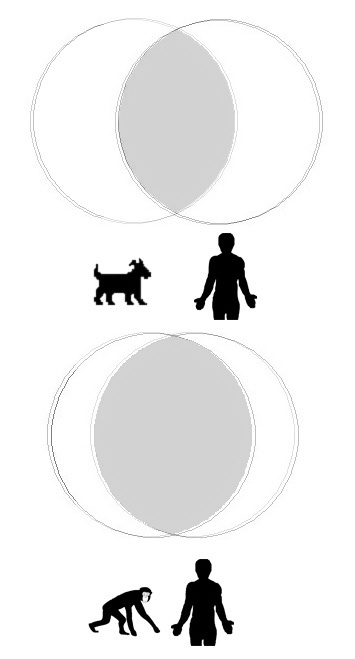
This effort to find, try, and jail, perhaps even execute, elderly Nazi's must be disturbing to vivisectors. It's hard to miss the fact that slowly but surely and probably inexorably, animals are being seen as sensitive beings with the right not to be harmed -- even if harming them makes us happy or is claimed to help us in some way. See for instance the news that India is moving to ban the use of cetaceans in entertainment and has stipulated that dolphins are non-human persons. Or the change in course by two of the most conservative nominally anti-animal organizations in the U.S., the Institute of Medicine and the National Institutes of Health both stating publicly that chimpanzees are so much like humans that they ought not be treated like, well, like animals are treated in biomedical research. The times, they are a changin'.

The writing is on the wall. People who torture animals in the name of science will sooner rather then later be seen in the same light as the Nazis who experimented on human prisoners in the name of science. Although what both groups of people were and are doing was and currently is legal, even sanctioned by their governments, that little detail hasn't mattered and won't matter in the future. Vivisectors will need to go underground, slip away to Uruguay or Bolivia and change their names. This must give them some pause and some sympathy for the Nazis for whom the vivisectors must feel some affinity.

Click here to participate in an on-line poll to voice your opinion on the question of whether vivisectors should shelter Nazis.

Wednesday, July 17, 2013

How like us need they be?

The recent decision to reduce the use of chimpanzees in federally-funded biomedical research is a small but highly significant step toward the liberation of all sentient beings. This step was possible because even scientists can learn and consider the implications of new ideas. As a result, the Institute of Medicine, part of the National Academy of Sciences, issued a report at the end of 2011 titled "Chimpanzees in Biomedical and Behavioral Research: Assessing the Necessity." It is clear that the committee members finally got around to catching up on what is known about these animals. They write:
Chimpanzee research should be permitted only on animals maintained in an ethologically appropriate physical and social environment or in natural habitats. Chimpanzees live in complex social groups characterized by considerable interindividual cooperation, altruism, deception, and cultural transmission of learned behavior (including tool use). Furthermore, laboratory research has demonstrated that chimpanzees can master the rudiments of symbolic language and numericity, that they have the capacity for empathy and self-recognition, and that they have the humanlike ability to attribute mental states to themselves and others (known as the “theory of mind”). Finally, in appropriate circumstances, chimpanzees display grief and signs of depression that are reminiscent of human responses to similar situations. It is generally accepted that all species, including our own, experience a chronic stress response (comprising behavioral as well as physiological signs) when deprived of usual habitats, which for chimpanzees includes the presence of conspecifics and sufficient space and environmental complexity to exhibit species-typical behavior. Therefore, to perform rigorous (replicable and reliable) biomedical and behavioral research, it is critical to minimize potential sources of stress on the chimpanzee. This can be achieved primarily by maintaining animals on protocols either in their natural habitats, or by consistently maintaining with conspecifics in planned, ethologically appropriate physical and social environments...
You can read the report here.

This resulted in the National Institutes of Health deciding to move toward the elimination of funding for most research using chimpanzees and to move toward the elimination of NIH-funded colonies by not funding any breeding. The news was instantly cheered by most informed people and also instantly criticized by some who "earn" a living by experimenting on animals. The primate vivisectors were particularly outraged.

As they feared, the NIH decision regarding chimpanzees has caused at least a few people to begin wondering about monkeys as well. See Medical Experimentation on Chimps Is Nearing an End. But What About Monkeys? and If We’re Retiring Research Chimps, Why Are We Excluding Monkeys?

Here's a piece I wrote in 2002, asking the same question: How Like Us Need They Be?

Tuesday, July 16, 2013

Beth Griffin Follow-Up: 16 Years Later

In 1997, I was sitting in front of the Stone Gate at Emory University, the last stop of my marathon protest of the then seven NIH Regional Primate Research Centers. Emory is home to the infamous Yerkes Primate Research Center. Coincidentally, the University of Wisconsin, Madison (an earlier stop on my protest tour) was embroiled in a public controversy stemming from their repeatedly broken promises to Dane County and Vilas Zoo officials that monkeys then housed at the zoo would not be used in harmful experiments.

A reporter from the Atlanta Journal Constitution showed up and asked me my opinion of the breaking news (which I hadn't yet heard) about the primate center technician who had just died as a result of being infected with the herpes B virus, a virus endemic in macaques. It turned out that Emory, intimately involved in writing the OSHA regulations governing the required safeguards for people working around macaques, had been derelict in own requirements for its own employees and negligent and incompetent in responding to accidental exposures of staff.

Beth Griffin wasn't wearing any face protection when something got in her eye while she was handling young rhesus monkeys destined to be hurt and killed. When she began developing symptoms, her concerns were downplayed and Emory doctors failed to recognize the likely life-threatening disease she had contracted in spite of the history of her case.

UW-Madison then used her death, callously and misleadingly, to argue that the monkeys at the zoo they had been lying about for years were a public health risk. Creepy cruel liars should never be trusted.

Anyway, here's a recent article that adds some new information to this altogether tragic story.
Daughter’s death leads to mom’s advocacy for biosafety

TimesNews
July 14th, 2013
by Marci Gore
Daughter’s death leads to mom’s advocacy for biosafety

Caryl Griffin now travels the world sharing the story of her daughter’s death and promoting procedures in research and health-care facilities to try to prevent what happened to her daughter happening to others. [This odd image accompanies the article. Maybe she's telling anyone who will listen?]

Caryl Griffin says sometimes it’s hard to understand why bad things happen to good people. “It’s hard to get your arms around life and what it means when there are bad times, especially when you’ve worked very hard to be faithful and allow God to work in your life. The Bible says, ‘You’ll be blessed.’ So, when things happen that don’t feel like a blessing, like the death of a child, it is then you wonder, ‘Where is God?’”

In 1997, Caryl experienced a parent’s worst nightmare when her daughter Elizabeth “Beth” Griffin died at the age of 22 after contracting a virus while working as a primate research assistant.

Caryl worked as a nurse for more than 30 years and, today, is an ordained elder with the Holston Conference of the United Methodist Church. Caryl has spent much of the past 15 years working through her grief. But with the help of her late husband, Dr. William Griffin, and Beth’s sister, Kimberly Griffin Hicks, Caryl has found solace — and hope — in traveling the globe to educate others about how to encourage safe practices in research facilities.

Following her graduation from Dobyns-Bennett High School in 1993, Beth moved to Atlanta, Ga. to attend Agnes Scott College. She completed a double major in biology and psychology, was a member of the Modern Dance Team, and was a paid researcher in the biology department. Beth graduated with honors from Agnes Scott with a bachelor of science degree in May 1997.

Beth was working as a research assistant at Yerkes Regional Primate Research Center at Emory University in Atlanta in the fall of 1997 where she was engaged in behavioral research on hormonal influences in Rhesus Macaques — or the Rhesus Monkeys — and was in the process of applying to continue her pursuit of graduate studies and research in the field of biological/psychological sciences.

Caryl, answering what she says was a very strong calling to go into the ministry, decided to attend the Candler School of Theology at Emory University at the same time Beth was a student there.

“Beth said, ‘Mom, do this!’ She was there to help me move into my apartment. She had her own apartment and her own friends. But she spent a lot of time with me, too. It was a lot of fun,” Caryl said.

But then, just three months after Caryl got to Emory, she got a call from Beth, saying she had been splashed in the eye while performing annual physicals on 100 monkeys in a research compound. This was in October of 1997.

Eight days after Beth was splashed, the first symptoms of a problem appeared — Beth had “matter” exuding from her eye. Caryl says Beth had worked with monkeys long enough to know she could be in serious trouble and she needed help quickly.

She went to the emergency room, where she was diagnosed with pink eye. Beth’s fears that she had been infected with the Monkey B Virus were ignored by the ER staff, Caryl said.

Beth tried calling the Office of Infectious Diseases and was told she needed a referral before she could be seen. A phone call to her internist to obtain a referral resulted in being told she needed to obtain her emergency room records first. Eleven days had passed since Beth was exposed.

The internist referred her to an ophthalmologist instead of the Office of Infectious Diseases. The ophthalmologist said Beth had Cat Scratch Fever. She was placed on an antibiotic. Despite Beth’s pleas, she still was not tested for the Monkey Virus.

Caryl says Beth’s condition continued to deteriorate. She developed a severe and pounding headache, but still could get no help from the medical community. After more phone calls, another visit to the ophthalmologist and Caryl’s insistence her daughter see an infectious disease physician, Beth’s diagnosis was finally confirmed.

Two weeks after she had been splashed in the eye, Beth was tested for the Monkey B Virus, or Macacine Herpesvirus 1. Just as she suspected, Beth’s results came back positive.
More...

Tuesday, June 25, 2013

[Animal research] hasn’t worked, and it’s time we stopped dancing around the problem... E. Zerhouni

NIH RECORD

From New Vantage

Ex-Director Zerhouni Surveys Value of NIH Research
By Rich McManus

On the front page...

Nearly 5 years removed from his NIH directorship, Dr. Elias Zerhouni returned to campus June 4 to offer his views about how to value NIH research economically in an era of flat federal research budgets.

...

“We have moved away from studying human disease in humans,” he lamented. “We all drank the Kool-Aid on that one, me included.” With the ability to knock in or knock out any gene in a mouse—which “can’t sue us,” Zerhouni quipped—researchers have over-relied on animal data. “The problem is that it hasn’t worked, and it’s time we stopped dancing around the problem…We need to refocus and adapt new methodologies for use in humans to understand disease biology in humans.” NIH RECORD Vol. LXV, No. 13. http://nihrecord.od.nih.gov/newsletters/2013/06_21_2013/story1.htm

Sunday, June 16, 2013

"[The Dalai Lama is] the human embodiment of compassion."

There was an article published at the end of May in Madison's Capital Times newspaper titled "How meditation can make the world a better place." The paper summarized the article's main point: "Psychological Science has published a study by UW-Madison graduate student Helen Weng that suggests people can learn how to be more compassionate towards others and themselves." I responded with a piece the editors titled "Madison's love affair with Dalai Lama hasn't benefited its animals."

The article on Weng's research came on the heals of the Dalai Lama's ninth visit to Madison. Here's a little bit of the coverage: "Dalai Lama, in ninth visit to Madison, stresses altruism and compassion."

I understand, to some degree, the frenzied adulation of Elvis, but I am continually amazed by the gullibility and studied ethical blindness of the non-native Tibetan followers of His Holiness. I love that title; it always makes me chuckle.

My article rankled Zorba Paster, a local medical doctor and well known local celebrity. Wikipedia says:
Robert Zorba Paster, MD is a physician and radio show host. Paster was born and raised in Chicago. He hosts a weekly radio call-in show on personal health issues called Zorba Paster on Your Health. The show is produced by Wisconsin Public Radio, sponsored by Public Radio International, and is broadcast on public radio stations around the United States. The show's trademark is a lighthearted, humorous approach, made possible by Zorba's banter with his co-host, Tom Clark. The show's style is somewhat similar to National Public Radio's program, Car Talk, providing callers both with good advice and kind-hearted ribbing.

Paster came to the defense of His Holiness: "Dalai Lama human embodiment of compassion."

Dr. Paster characterizes himself as an amateur Buddhist who has been friends with the Dalai Lama since 1976. Amateur Buddhist? Is that like an amateur Baptist? Does he mean that he's not a professional Buddhist? It's not clear what he means, but it is clear that he is a Buddhist who is intimately associated with the local Tibetan Buddhist center and monastery Deer Park.

In my editorial, I pointed to the plain fact that UW-Madison researcher Richard Davidson promotes meditation as a way to increase compassion, is a personal friend of the Dalai Lama's and is involved in invasive brain research into the neurobiology of fear using young monkeys. I also pointed out that His Holiness eats animals and supports animal experimentation. Paster claims that the Dalai Lama's support for hurting and killing those weaker than ourselves, and Davidson's active role in such work, are examples of compassion. How is it that someone smart enough to get through medical school and finagle a national radio show can be so seemingly blind?

There is a practice in Tibetan Buddhism called Guru Yoga. One source describes it this way:
Guru Yoga — the practice of merging one’s mind with the wisdom mind of the master. The practice consists of visualizing the guru (either in his own form or in the form of deity), requesting his blessings, receiving his blessings, and merging one's mind with the master's wisdom mind.

His Holiness has his name on a book titled: The Union Of Bliss And Emptiness: Teachings On The Practice Of Guru Yoga. I don't think it likely that any long-time practitioner of Tibetan Buddhism isn't also a practitioner of guru yoga, a fundamental practice in Tibetan Buddhism. And Paster's claim of being an amateur Buddhist is at odds with his long intimate involvement with Lama Lhundub Sopa, or Geshe Sopa, the head of Deer Park. I suspect that Paster and his wife have spent many years trying to merge their minds with his; and I suspect that any Tibetan Buddhist from a sect that has not been banned by His Holiness imagines or tries to achieve some sort of mind meld with the Dalai Lama's wisdom mind as they visualize him as a deity. It makes perfect sense that someone would react with vigor when the perfection of their deity is questioned. Less understandable is the time it can take us to realize that our idols have feet of clay. Unfortunately, the phenomena is very common and frequently leads to muddied thinking and obedience to those with much less than good intent.

Dr. Paster makes some false and odd claims outside his weak defense of His Holiness's and Davidson's embrace of cruelty in his editorial that I'll address here.

-- "The University of Wisconsin has been actively involved in primate experiments since Harry Harlow opened the Primate Center back in the '60s. The reason that many are disturbed by primate research is that we are so close to monkeys on the evolutionary chain. They look just like us. Yet that research has been invaluable in improving maternal and child care and investigating the root sources of anxiety."

This is the recitation of mythology. See my essays:
Harry Harlow's Dark Shadow
Children Need Love and Hugs: A Brief History of Maternal Deprivation
And, Harry Harlow and Stephen Suomi, a chapter from my book, Monsters.

-- "Primate trials were critical to Drs. Salk and Sabin’s developing the polio vaccine, which saves millions of lives every year. Is this bad stuff? Most people would agree with me that ethically done, primate research engineered to help mankind is important to do. The key word here is ethical."

First, the "millions" of lives being saved each year is pure hyperbole. In 1952, at the peak of the polio epidemic in the U.S., 3,145 died from complications related to the disease. This is a lot of people, but polio doesn’t even make the 1952 (or any other year’s) top ten list of the leading causes of death. Polio was hyped only because President Roosevelt had the disease.

Until polio could be grown in vitro, reservoirs of the virus were maintained through serial inoculations of rhesus macaques with tissue containing the virus. If one looked only at that fact, it could appear that the monkeys were a key element in the effort to develop a vaccine. But the whole story suggests something else.

Monkeys harboring the virus were killed and their brains harvested. This is the tissue that was used to inoculate the next batch of monkeys in order to keep a supply of the virus on hand. The virus-laden tissue was injected into their nasal passage and the virus quickly migrated into their brain. But the repeated reinoculations with brain tissue led to the development of a strain of polio much different from that circulating in the human population.

Additionally, because the results were so unambiguous, that is, injecting polio infected tissues into the nasal passages did indeed cause polio, it was falsely believed for a generation that polio was air-borne, when in fact, in natural settings it is ingested orally and lodges first in the gastrointestinal tract.

This was recognized early on by scientists studying humans, but the animal data was so compelling that a generation was lost as scientists based their studies on a different strain transmitted in a different way. The breakthrough came when scientists stopped culturing the virus in monkeys. Nobelprize.org says:
The 1954 Nobel Prize in Physiology or Medicine was awarded to John Franklin Enders and his junior associates Thomas Huckle Weller and Frederick Chapman Robbins "for their discovery of the ability of poliomyelitis viruses to grow in cultures of various types of tissue." For forty years, dependence on a monkey host for propagation of the polio virus limited progress in basic studies until 1949 when Enders, Weller and Robbins showed how cultures of kidney and other human and monkey cells could produce large quantities of the virus. This breakthrough opened the way to studies that set standards for precision in investigations of other viruses and led directly to the engineering of the Salk and Sabin vaccines that eliminated the dreaded specter of a disabling and often lethal disease.
It remains to be seen whether or not the use of monkeys was either critical or ethical.

-- "Bogle suggests that eating animals is inherently bad. But in fact, even the most strict vegetarian cannot avoid eating animals, i.e., insects. The proof comes from vitamin B12 studies. There is absolutely no source of vitamin B12 in the plant kingdom; it comes from animals. Research of South Indian lifetime vegetarians shows that their B12 comes from insect parts found in grains, flour, legumes and beans. Even a vegan isn’t be immune from animal destruction."

In my experience, "experts" believe the things they "know" to be true and rarely stop to question them. Vitamin B12 does not come from animals. See Microbial production of vitamin B12. Martens JH, Barg H, Warren MJ, Jahn D. Appl Microbiol Biotechnol. 2002. Some animal tissues contain B12, but this is because they eat foods that are contaminated with the micro-organisms that produce B12. No one needs to eat animals to get a sufficient quantity of B12.

Paster seems to me to be claiming that because no one can live in a way that doesn't ever cause others harm that we ought not be upset when someone harms others willfully. Because a purported vegetarian in southern India may get get a trace of vitamin B12 from a dead bug in the grains they eat, it's OK to eat animals generally. Wow. Just wow. What ever happened to Harm no sentient being?

-- "Now on to Bogle’s most outrageous implication — that Tibetan Lamas subjugated the Tibetan people for 800 years. I wonder if Bogle has ever been to Tibet, as I have numerous times. If he had, he would have seen how Tibetans are subjugated by their Chinese overlords, who claim that they “liberated” them. This is classic communist propaganda. Tibetans are quickly becoming a minority in their own country. You need only see the human immolations that are going on in Tibet to see how desperate Tibetans are."

I've never been to Tibet. Paster's trips to the holy land seem not to have resulted in much knowledge of the region's sociopolitical history. Tibet's history, as far as human rights are concerned, is not much different than the history of every other feudal state's. There has been a slow improvement over time. Thubten Gyatso was two years old in 1878, when he was recognized as the reincarnation of the Dalai Lama and became the 13th Dalai Lama of Tibet, the current Dalai Lama, Tenzin Gyatso's immediate predecessor. Thubten Gyatso died in 1933. In 1937, he was reborn and became the current Dalai Lama. Anyway, it appears that there is some doubt or lack of clarity, but it was probably Thubten Gyatso the 13th Dalai Lama who more or less ended the caste-based slavery that apparently was common at the time. Some writers who visited the country just prior to the 1950 invasion by China, report seeing people with missing appendages as a result of being punished by the government. This doesn't sound very unlike some parts of the Middle East.

Tibet in 1950 wasn't any more progressive than any of its neighbors. Were average people being subjugated by the Lamas? Of course they were. There isn't democracy in the belief that those in charge are in charge because they are reincarnated rulers.

Self-immolation is a relatively common practice in Buddhism. In fact, if you look up self-immolation on Wikipedia, it is an essay on Buddhism. In other words, if the Chinese had invaded and subjugated someone other than Buddhists, no one would be setting themselves on fire.

I think Zorba Paster ought to have said up front that he is actually a long-time Tibetan Buddhist and a personal friend of Richard Davidson. He ought to have checked his facts before offering advice on people's nutritional needs and on the development of the polio vaccine. He paints a misleading picture of the self-immolations and ignores the reality of Tibetan history.

I don't care about Tibetan Buddhism any more than I care about any other religion. What drives me up the wall is media's absurd reporting on the great compassion of the leader of the church and UW-Madison and its vivisectors using the Dalai Lama's endorsement of vivisection to claim that hurting those weaker than themselves is compassionate.

Thursday, May 23, 2013

UW-Madison wants exemption from state open records law

First, they slipped in an exemption from the state's anticruelty laws for themselves; now they want to keep their cruelty even more secretive. Evil is as evil does.
UW-Madison wants to protect research by limiting open records law
By Jason Stein and Karen Herzog of the Journal Sentinel
May 23, 2013 1:44 p.m.

The University of Wisconsin-Madison is seeking to limit the state's open records law — potentially through language slipped into the state budget — to keep from the public information about research until it is published or patented.

No specific incidents of harmful disclosures were cited in language for a possible motion that is being passed among Republican lawmakers and was obtained by the Journal Sentinel.

University officials have been seeking to convince GOP lawmakers to advance the legislation either as a separate bill or by inserting it into the state budget when the UW System's part of the bill comes before the Legislature's budget committee Thursday.

In an interview Thursday, Assembly Speaker Robin Vos (R-Rochester) made clear he was at least open to the idea, though he didn't know all the details on it. He didn't say if the provision would be included in a larger and still unreleased motion on the UW System that is expected to be voted on by Joint Finance Committee members later in the day as it considers funding for public universities and colleges in the 2013-'15 state budget.

Vos said he saw a need to make changes to the open records law to ensure a researcher's work wouldn't have to be released publicly before the researcher was ready to publish it.

"In general, if it's a public institution things should be public, but I don't want to hurt (research)," Vos said.

more...
And here’s UW’s memo: http://media.jsonline.com/documents/Open+Records+Research+Exemption+Language.pdf

Wednesday, May 15, 2013

The Discovery Institute gets one right

I don't think I've ever agreed with anything I've read from Wesley J. Smith a Senior Fellow at the Discovery Institute who is a regular critic of protecting animals. The organization is very pro-status-quo when it comes to exploiting animals. Animals don't have souls, so piss on them, they seem to be saying. I guess they think that's what God wants. Whatever. Our apparent shared close observation of modern experimental biology has though resulted in a rare convergence of opinion on at least this point: Self Regulation of Science Doesn't Work.

Vivisectors ask you to ignore the obvious.

Opinion: Ethics Training in Science: The NIH has required researchers to receive instruction about responsible conduct for more than 20 years, but misconduct is still on the rise. James Hicks. May 14, 2013. The Scientist.

.... Today, 1 in 3 scientists responding anonymously to surveys admits to “questionable” research practices; research misconduct cases handled by the US Office of Research Integrity (ORI) are at an all-time high; and retractions of scientific papers have increased exponentially since 2005. It should be noted that not all retracted papers involve foul play, but a recent study reported in PNAS surveying 2,047 biomedical and life-science papers revealed that 67 percent of retractions were directly attributable to misconduct.
It strains credibility to imagine that an industry based on harming animals and filled with those who admit to unethical behavior treat their research subjects with compassion or respect.